
Chutney vs Jam: Exploring the Key Differences and Unique Flavours
Updated: Mar 15
When you reach for a jar to add a burst of flavour to your meal, you might wonder whether to choose chutney or jam. Both are popular condiments made from fruits, but their taste, texture, and uses vary widely. Understanding these differences can help you pick the right one for your dish.
What Makes Jam Different from Chutney?
Jam is a sweet spread made primarily from fruit and sugar. It often has a smooth or slightly chunky texture and is commonly enjoyed on toast, in desserts, or as a sweet complement to breakfast foods. The sweetness is the defining feature of jam, which comes from the natural sugars in fruit combined with added sugar.
Most jams include commercial pectin, a natural thickening agent extracted from fruits, typically apples, which helps the jam set and achieve a firm, spreadable consistency. For example, Puffin Bay Jams do not use commercial pectin, relying instead on the natural pectin in fruits, but this is an exception rather than the rule.
Chutney, on the other hand, is a savoury condiment that balances sweet, sour, and spicy flavours. It often includes fruits but is combined with vinegar, fresh or dried spices, and sometimes chili peppers. This combination creates a complex, zingy taste that can be sweet, tangy, and spicy all at once.
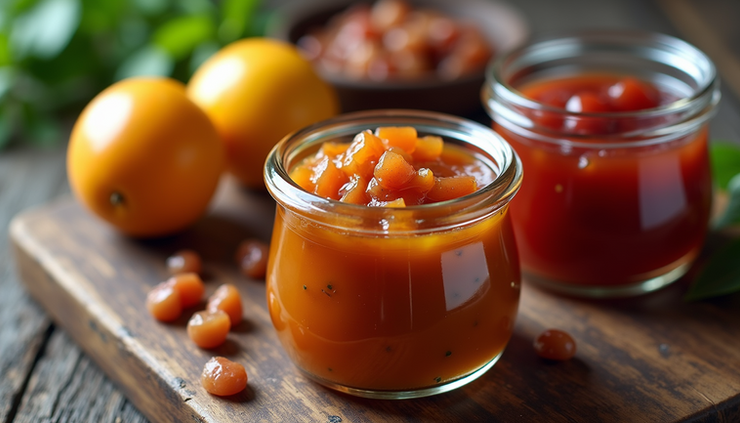
Unlike jam, chutneys do not contain added pectin. This means chutneys can be chunky with visible pieces of fruit, dried fruit like raisins, and spices, or they can be blended into a smooth sauce. The texture varies depending on the recipe and intended use.
Ingredients and Flavour Profiles
Jam Ingredients and Flavours
Fruit: Strawberries, raspberries, blueberries, apricots, and peaches are common.
Sugar: Added to sweeten and preserve.
Pectin: Usually commercial, to thicken the jam.
Acid: Lemon juice or citric acid to balance sweetness and help set the jam.
The flavour of jam is straightforward: sweet and fruity. Some jams may have subtle hints of spices like vanilla or cinnamon, but the fruit flavour or flavour combinations dominate.
Chutney Ingredients and Flavours
Fruit: Mango, apple, tamarind, or even tomatoes.
Vinegar: Adds acidity and tanginess.
Spices: Mustard seeds, cumin, coriander, ginger, garlic, chili, and cloves.
Sweeteners: Brown sugar or honey, but used sparingly.
Additional elements: Onions, raisins, or dried fruits for texture and flavour complexity.
Chutney’s flavour is layered and bold. The vinegar and spices create a savoury, tangy base, while the fruit adds sweetness. The balance varies by recipe, from mildly sweet to spicy and sharp.
Texture and Appearance Differences
Jam usually has a uniform texture, either smooth or with small fruit pieces. It spreads easily and holds its shape on bread or desserts. The presence of natural pectin ensures it is thick and gel-like depending on the fruit used.
Chutney texture varies widely:
Chunky chutneys have visible pieces of fruit, nuts, or dried fruit.
Smooth chutneys are blended but still retain a thicker, sauce-like consistency.
Chutneys often appear darker or more varied in colour due to spices and vinegar.
Culinary Uses and Pairings
How to Use Jam
Spread on toast, bagels, or scones.
Swirled into yoghurt or oatmeal.
Used in baking, such as thumbprint cookies or jam tarts.
Paired with cheese, especially mild or creamy varieties.
How to Use Chutney
Served alongside grilled meats or roasted vegetables.
Added to sandwiches or wraps for extra flavour.
Mixed into curries or stews for a tangy kick.
Paired with strong cheeses like cheddar or blue cheese.


Comments